
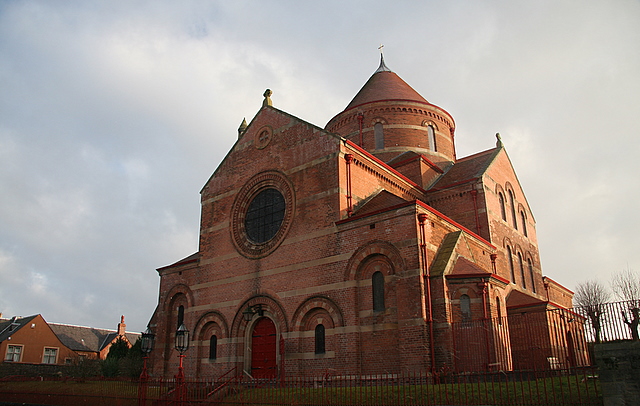
Tucked among the red sandstone buildings of Galston, a small mill town in the Irvine Valley of East Ayrshire, stands one of the most unexpected churches in Scotland. St Sophia’s Roman Catholic Church is a striking anomaly: a building rooted in the great Byzantine tradition of Constantinople, rising improbably from the Ayrshire countryside. To encounter it for the first time is to wonder how on earth it came to be here — and the answer lies in the extraordinary life and passions of one of Victorian Britain’s most remarkable figures.
Origins & The Marquess of Bute
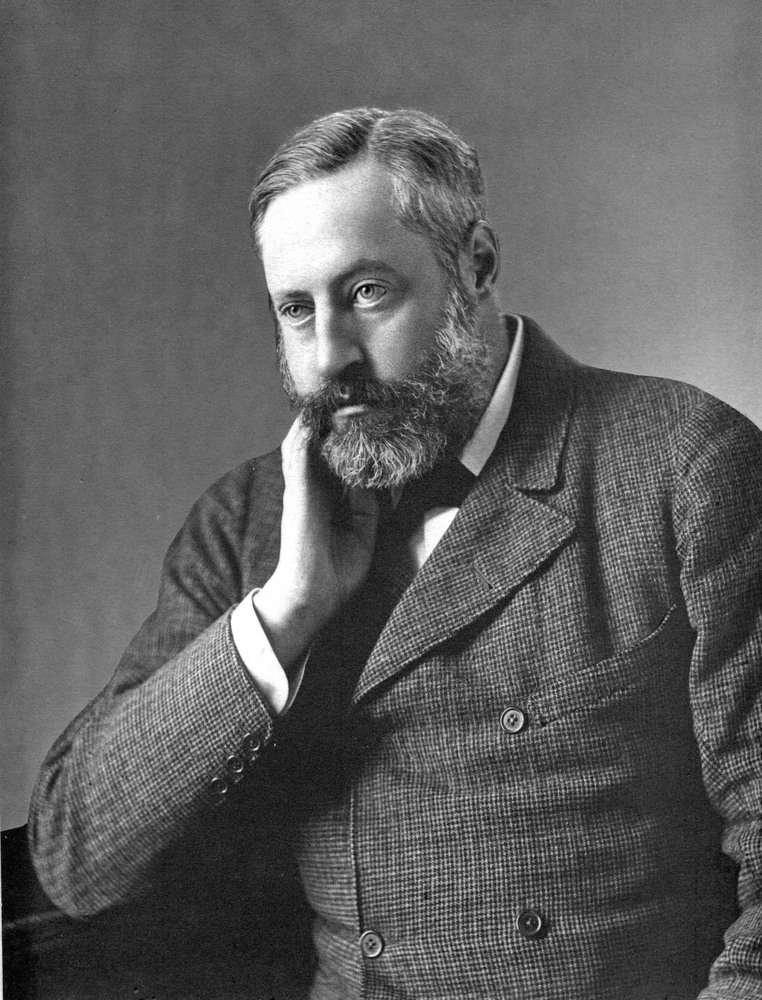
The church owes its existence entirely to John Patrick Crichton-Stuart, 3rd Marquess of Bute (1847–1900), one of the most extraordinary patrons of Victorian architecture. Born into immense wealth — derived chiefly from the coal and iron industries of South Wales — he became, at the age of twenty-one, the richest man in Britain. Yet it was not money alone that defined him. Bute was a passionate scholar, linguist, and devotee of medieval art, history, and religion.
At the same age he assumed control of his estates, Bute took a step that shocked polite Victorian society: he converted to Roman Catholicism. Received into the Church on 8 December 1868 by Monsignor Capel at a convent in Southwark, he was later confirmed personally by Pope Pius IX in Rome. The conversion scandalised his contemporaries so thoroughly that Prime Minister Benjamin Disraeli used the young Marquess as the inspiration for the eponymous hero of his novel Lothair, published in 1870.
Far from retreating from his faith, Bute became one of the leading figures of British Catholicism and threw his enormous resources into church-building and restoration across Scotland and Wales. His collaborations with the architect William Burges produced two celebrated Gothic Revival masterpieces — Cardiff Castle and Castell Coch — while later in life he commissioned Sir Robert Rowand Anderson to entirely rebuild Mount Stuart, the family seat on the Isle of Bute. His expenditure on building and restoration made him, by any measure, the foremost architectural patron of the nineteenth century.
It was in this spirit that he turned his attention to Galston, a town in Ayrshire that lay within the sphere of his interests. For the local Catholic community there, he resolved to provide something far beyond the ordinary: a church that would bring the ancient splendour of Byzantium to the Scottish countryside.
The Architect & the Design
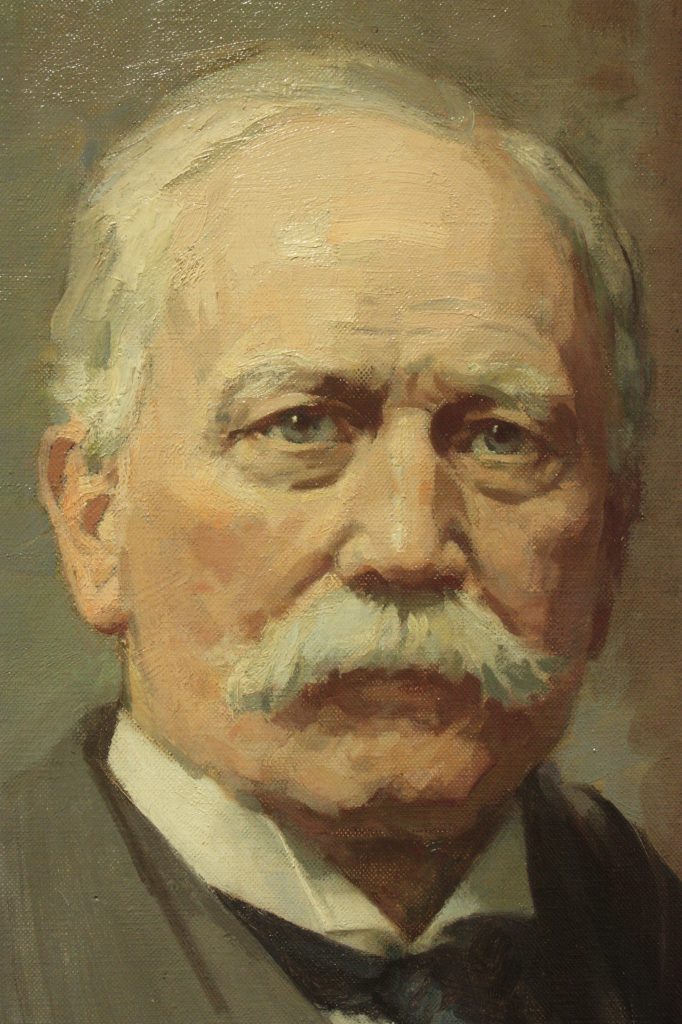
Bute entrusted the commission to Sir Robert Rowand Anderson (1834–1921), the foremost Scottish architect of his generation. Anderson was already well known to Bute, having been appointed to rebuild Mount Stuart after it was largely destroyed by fire in 1877. For St Sophia’s, Anderson — with possible input from his associate Robert Weir Schultz, who was working with him at the time — drew inspiration directly from the great Hagia Sophia in Istanbul, the sixth-century Byzantine masterpiece that had defined sacred architecture for over a millennium.
Construction began in 1884 and the church was completed in 1886. The building is laid out on a Greek cross plan — four arms of roughly equal length — with the interior spaces united beneath a central round tower. Constructed in warm red brick with white freestone dressings, the exterior has a distinctive and unified character that owes nothing to the Gothic Revival then dominant in British ecclesiastical architecture. Semi-circular arch recesses frame the entrances and windows throughout, reinforcing the Romanesque and Byzantine character of the whole.
The central tower is topped with a conical roof of red clay tiles, giving the church a profile that is immediately recognisable and entirely unlike anything else in the region. From a distance, the building reads as a single, coherent composition — compact, dignified, and quietly exotic.
Legacy & Significance
St Sophia’s occupies a unique place in Scottish architectural history. At a time when Gothic Revival was the near-universal language of Victorian church-building in Britain, this small Ayrshire town received a building that looked instead to Constantinople and the early Christian East. It is a testament both to the breadth of Bute’s learning and to Anderson’s skill that the result is not a mere curiosity but a genuinely moving work of architecture.
The church holds a Category A listing — the highest designation awarded by Historic Environment Scotland — and is featured in numerous authoritative surveys of Scotland’s architectural heritage, including the Buildings of Scotland series. It was listed at Category A status in March 2000, upgraded from its original Category B designation, with the Historic Environment Scotland reference LB32010.